

CAN ONE
HEAR A SCREAM
IN AN IMAGE?
2026-03-16
Clémence Carel
Clémence Carel
© DORIAN LAFARGUE
(1) Credit line reserved
(2) Credit line reserved
© DORIAN LAFARGUE
(1) Credit line reserved
(2) Credit line reserved
© DORIAN LAFARGUE
CAN ONE
HEAR A SCREAM
IN AN IMAGE?
2026-03-16
Clémence Carel
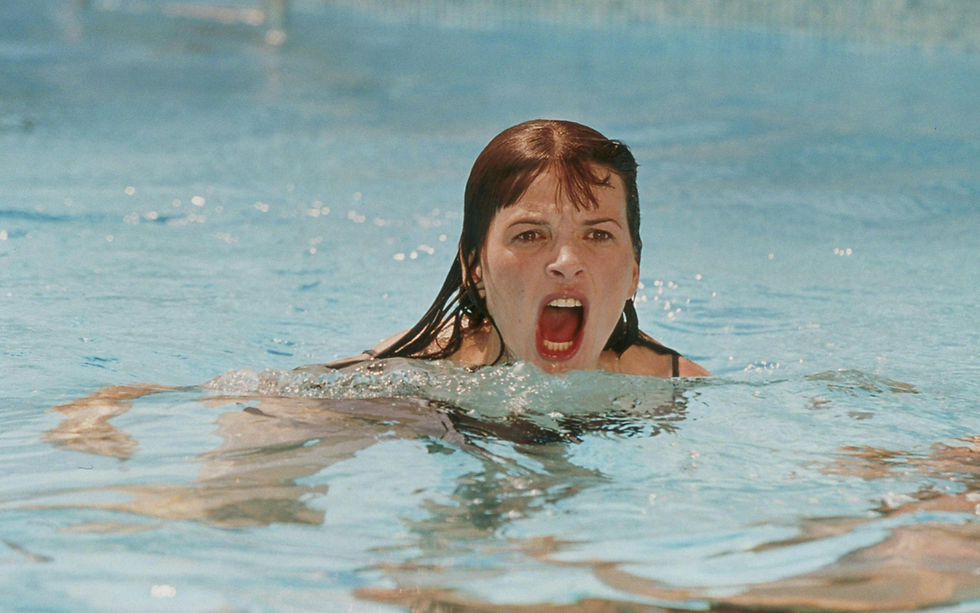
Like watching a political debate with the sound muted, a scream seen rather than heard is a silence one struggles to lip-read. The image glitches; nothing comes through. A gap, a boon to non-production. Like asphalt cracking open without revealing the guilty root beneath. If nature abhors a vacuum, vision is made dizzy by it. Five seconds of staring, ten seconds, and the itch begins. What remains is the torn-open face, the voiceless pathway of pain.

(1) Credit line reserved
(2) Credit line reserved
A silent scream fascinates because it presents a lack that demands to be filled. The spectator’s pact is rubbed raw, scratched at, much as in the work of photographer Alix Cléo Roubaud, who described this pact in the following terms: “the music in a film generally signals the emotion we are supposed to feel; image and sound usually underscore one another.” A scream without sound also fascinates because it appears so foreign to the public gaze despite being ubiquitous throughout the history of art. In art, the scream guarantees excess: pleading Christ-like figures, Romantic icons of suffering. Any picture gallery, distinguished or otherwise, lines them up, securely inscribed within the familiar forms of art history. Put differently, the representation of suffering at its point of paroxysm has long been standard practice. In the museum, gaping mouths become fixed motifs; unhinged jaws slide into the realm of the familiar imaginary.
And yet what a strange behaviour, relative to the civic order, it is to exhibit a scream and demand attention to it. We are well acquainted with the impossibility of understanding speech—or even hearing it at all—with obstructed communication, unknown codes, failed transmission. But the voice knows no economy (at least within the transmedia context of Western societies where a measure of freedom of expression still persists); and this is true, above all, for those privileged voices that have been granted the right, the conventional capacity, and the material means to express themselves.
CAN ONE HEAR A SCREAM IN AN IMAGE?


And yet what a strange behaviour, relative to the civic order, it is to exhibit a scream and demand attention to it. We are well acquainted with the impossibility of understanding speech—or even hearing it at all—with obstructed communication, unknown codes, failed transmission. But the voice knows no economy (at least within the transmedia context of Western societies where a measure of freedom of expression still persists); and this is true, above all, for those privileged voices that have been granted the right, the conventional capacity, and the material means to express themselves.
And yet what a strange behaviour, relative to the civic order, it is to exhibit a scream and demand attention to it. We are well acquainted with the impossibility of understanding speech—or even hearing it at all—with obstructed communication, unknown codes, failed transmission. But the voice knows no economy (at least within the transmedia context of Western societies where a measure of freedom of expression still persists); and this is true, above all, for those privileged voices that have been granted the right, the conventional capacity, and the material means to express themselves.
(1) Credit line reserved
(2) Credit line reserved
Why, then, was the scream so commonplace in older art, while contemporary culture relegates it to the sensational, the fabulous, the Pinterest tableau, or emo aesthetics—let us say, adolescent moods? What does our easy acceptance of this commonplace within the silence of the museum reveal about us, a silence disturbed only intermittently by the inevitable mansplainer? Are we equally at ease with screams encountered as sound—through media channels or out on the street? The scream IRL is neither Christ-like nor Romantic. It disrupts the state of things, what is. It is not glamorous. It is the scream we ignore, avoid, and sidestep: no-kids spaces amount, in effect, to no-shouting spaces.
(1) Credit line reserved
(2) Credit line reserved
Because it embodies a transgression of civic quietude and functions socially as a sign of opposition, the scream is repeatedly summoned—almost to the point of cliché—within body art and performance. At its most extreme, political against the polished and the polite, performer Jérôme Grivel screams in order to occupy that razor-thin threshold between the unbearable and trance; to jab at the point where habituation sets in—and it always does—as it does each day when we grow accustomed to the worst.
Yet the representation of the worst without sound, in two dimensions, does not merely place the spectator’s body at the centre of an experience of listening to an actual scream. It asks them to look at the depiction of someone screaming and, through a synaptic act of mediation, reconstruct the idea of that sound. It asks them, in the words of artist Aura Satz, to “recalibrate” perception by supplementing it with a listening performed through the eyes. It asks them to internalise the scream like a virus that unsettles the heart. One that slowly spoils the mood. The feeling that one has heard the scream—because hearing it seems the only logical thing to do—lingers in frustration; it does not simply dissipate. The scream in the image cannot be heard. It colonises.
Because it embodies a transgression of civic quietude and functions socially as a sign of opposition, the scream is repeatedly summoned—almost to the point of cliché—within body art and performance. At its most extreme, political against the polished and the polite, performer Jérôme Grivel screams in order to occupy that razor-thin threshold between the unbearable and trance; to jab at the point where habituation sets in—and it always does—as it does each day when we grow accustomed to the worst.
Yet the representation of the worst without sound, in two dimensions, does not merely place the spectator’s body at the centre of an experience of listening to an actual scream. It asks them to look at the depiction of someone screaming and, through a synaptic act of mediation, reconstruct the idea of that sound. It asks them, in the words of artist Aura Satz, to “recalibrate” perception by supplementing it with a listening performed through the eyes. It asks them to internalise the scream like a virus that unsettles the heart. One that slowly spoils the mood. The feeling that one has heard the scream—because hearing it seems the only logical thing to do—lingers in frustration; it does not simply dissipate. The scream in the image cannot be heard. It colonises.
© DORIAN LAFARGUE

